
16—18 травня у Варшаві відбувалася Міжнародна конференція “The roots of the collapse of the Soviet Union and the Eastern Bloc – economic aspects” (“Витоки падіння Радянського Союзу та Східного блоку — економічний аспект” ), де науковці з Європи та Північної Америки дискутували економічні причини падіння Союзу.
Йшлося зокрема про відносну економічну ефективність радянської економіки (Paul R. Gregory, Hoover Institute, Stanford), про роль енергетичних джерел в народному господарстві СРСР після 1945 року (Bogdan Musial, UKSW), про планову економіку УССР (Stefan Karner, Boltzmann Institute, Graz) та інших республік колишнього Союзу та Східного блоку. Увагу приділено ролі особистостей у історичних процесах, зокрема у доповіді “Люди, які передбачали розпад СССР — Андрій Амальрік, Андрій Сахаров, Михайло Горбачов, Олександр Солженіцин” (Боріс Хавкін, РДГУ, Москва). Розглянуто міжнародний вплив на економічну ситуацію в СРСР, наприклад, відомий американський історик Марк Крамер (Mark Kramer, Harvard University) зосередив свою увагу на результатах американської політики ембарго для Радянського блоку.
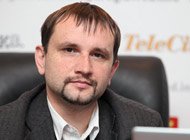
Володимир В’ятрович, к.і.н., науковий співробітник НаУКМА, голова вченої ради Центру досліджень визвольного руху виступив із доповіддю “The last years of the KGB in the Ukraine 1985-1991” (Останні роки КГБ в Україні. 1985—1991). Історик відзначив, що економічні питання не були пріоритетом в діяльності спецслужби, окрім оборонних аспектів та контрозвідувального захисту теж насамперед в сфері оборони. Втім, в останні роки СССР “страх, яким протягом 70-ти років користувався КГБ поступово зникав і для впливу на суспільство став потрібним авторитет. Для його здобуття Колегія КГБ УРСР постановила значні зусилля зосередити на боротьбі з організованою та економічною злочинністю, що саме тоді почала активно здійматися на ноги”.
“У рекомендаціях, щодо покращення іміджу КГБ постійно наголошувалося на необхідності згадувати успіхи у боротьбі з “економічним саботажем”, — говорить В’ятрович. — У звіті про роботу відділу зв’язків з громадськістю КГБ УРСР вказувалося, що в 1990 році на цю тему опубліковано 136 статей, підготовлено та продемонстровано 46 радіо та телепередач”. Таким чином органи безпеки намагалися продемонструвати свою корисність у суспільстві, яке дедалі глибше провалювалося в прірву економічної кризи.
Але “останні дні радянської влади в Україні між іншим показали, що розклад режиму означав і розклад його спецслужби”, — підсумував В’ятрович.
Організатори: Ludwig Boltzmann Institut für Kriegsfolgen-Forschung, Graz-Vienna, and Institute of International Law, European Union and International Relations (University of Stefan Kardinal Wyszyński (UKSW), Warsaw), European Network Remembrance and Solidarity (Warsaw), Russian State University for Humanities (RGGU, Moscow), University of Hildesheim
У співпраці: Institute of History, Polish Academy of Science (IH PAN), Harvard University (Davis Center for Russian and Eurasian Studies), Russian State Archive of Contemporary History (RGANI)
Програму заходу можна переглянути нижче.
The roots of the collapse of the Soviet Union and the Eastern Bloc – economic aspects International Conference, Warsaw 16-18 May 2013
Thursday, 16th May 2013
16:00 Opening session
Tomasz Wiślicz-Iwańczyk (Vice-Director of the Institute of History Polish Academy of Sciences)
Stefan Karner (Ludwig Boltzmann Institute for Research on War-Consequences, Graz)
Cezary Mik (Vice-Rector, University of Stefan Kardinal Wyszyński)
Rafał Rogulski / Jan Rydel (European Network Remembrance and Solidarity)
Herbert Krauss (Ambassador of the Republic of Austria to Poland)
Panel 1
16:30 – 17:45: Economy Soviet Style
Chair: Mark Kramer (Harvard University)
Paul R. Gregory, Relative economic performance of the soviet economy (Hoover Institute)
Friday, 17th May 2013
Panel 2 (part I)
9:00 – 10:30: Soviet Union
Chair: Paul R. Gregory (Hoover Institute)
Boris Khavkin , They predicted the Collapse of the USSR: Andrei Amal’rik, Andrei Sakharov, Mikhail Gorbachev, Aleksandr Solzhenitsyn (RGGU, Moscow)
Bogdan Musial, The role of energy sources in the soviet economy after 1945 (UKSW)
Stefan Karner, Planned economy in the USSR 1985-1991 (Boltzmann Institute, Graz)
10:30 – 11:00 Coffee Break
Panel 2 (part II)
11:00-12.15: Soviet Union
Chair: Zbigniew Lewicki (UKSW)
Andrej Zamoyski, The costs of the fight against alcoholism and the Chernobyl catastrophe (Minsk)
Mikhail Prozumenshchikov, Economic advisors of Mikhail Gorbachev and their reform proposals (Russian State Archives for Contemporary History)
Paweł Kowal, The Development of the Oligarch System in the Countries of the Former Eastern Bloc: Key Questions (Institute of Political Studies of the Polish Academy of Sciences)
Commentator: Ol´ga Pavlenko (RGGU, Moscow)
12:15 – 14:00 Lunch
Panel 3
14:00 – 15:30: The economic crisis and society in the Eastern Bloc countries in the 1980s
Chair: Ol´ga Pavlenko (RGGU, Moscow)
Antoni Dudek, The polish crisis – the collapse of the economy and attempts at reform (Uniwersytet Jagieloński, Kraków)
Burkhard Olschowsky, Between claim and reality – decline of East German economy (European Network Remembrance and Solidarity, Warsaw)
Oldřich Tůma, The economic situation in Czechoslovakia in the late 1980s (Czech Academy of Science, Prague)
Commentator: Raphael Krüger (Berlin)
15:30 – 16:00 Coffee Break
Panel 4
16:00 – 17:45: The economic crisis and society in the Eastern Bloc countries in the 1980s
Chair: Peter Ruggenthaler (Boltzmann Institute, Graz)
Csaba Békés, Hungary – role model? (Corvinus University, Budapest)
Iskra Baeva, Bulgaria in 1980s – the Price of being the most faithful satellite of Soviet Union (Kliment Ohrid University, Sofia)
Mark Kramer, Romania: The Perils of Debt Repayment (Harvard University)
Saturday, 18th May 2013
Panel 5
9:30 – 10:45: The Western Soviet Republics of the USSR in the 1980s
Chair: Serhii Plokhii (Harvard University)
Jan Szumski, Economic situation in Bjelorussia (UKSW, Warsaw)
Volodymyr Viatrovych, The last years of the KGB in the Ukraine 1985-1991 (National University of KyivMohyla Academy)
David J. Smith, Making the case for independence: the economic policies of the Baltic governments during 1990-91 (Uppsala University / Glasgow University)
Commentator: Zbigniew Lewicki (UKSW)
10:45 – 11:15: Coffee Break
Panel 6
11:15 – 12:45: East-West relations I
Chair: B. Khavkin (RGGU, Moscow)
Bogdan Musial, The last hope? West Germany in the plans of the Kremlin (UKSW)
Manfred Wilke, West Germany and the economic crisis in the Eastern Bloc in the 1980s (BoltzmannInstitute, Graz and Berlin)
Axel Lebahn, The backdrop of the German-Soviet negotiations concerning the construction of the Jamal pipeline (Free lance strategic Russia consultant – Göttingen – , former Deutsche Bank)
Commentator: Ralf Ahrens (Potsdam)
12:45 – 14:30 Lunch
Panel 7
14:30 – 16:00 East West relations II
Chair: Marek Kornat (UKSW)
Mark Kramer, US-embargo policy against the Soviet Bloc and its effects (Harvard University)
Serhii Plokhii, American Humanitarian Aid to the Soviet Union in 1991 (Harvard University)
Anthony Kemp-Welch, Great Britain and the economic crisis in the Eastern Bloc in the 1980s (University of East Anglia)
Commentator: Jens Boysen (Deutsches Historisches Institut Warschau)
16:00 – 16:30 final discussion
Mikhail Prozumenshchikov, Mark Kramer, Bogdan Musial
Venue: Rynek Starego Miasta 29/31, 00-272 WARSAW (Sala Lelewela).
Organizer: Ludwig Boltzmann Institut für Kriegsfolgen-Forschung, Graz-Vienna, and Institute of International Law, European Union and International Relations (University of Stefan Kardinal Wyszyński (UKSW), Warsaw), European Network Remembrance and Solidarity (Warsaw), Russian State University for Humanities (RGGU, Moscow), University of Hildesheim
In cooperation with: Institute of History, Polish Academy of Science (IH PAN), Harvard University (Davis Center for Russian and Eurasian Studies), Russian State Archive of Contemporary History (RGANI)
Presentations: 15 minutes + 10 minutes discussion
The conference will be held in English and Polish (with simultaneous translation)
German and Russian presentations will not be translated
Додано 23.05.2013







