
Myth
19
The Nazi Ost Plan Involved the Destruction of All Slavs
Sergii Riabenko
The Great Soviet Encyclopedia, 3rd Edition, Vol. 18
“The ‘Ost Plan’ included the physical destruction of 30 million people and the eviction (and practically, the destruction) of more than 50 million Belarusians, Poles, Russians, Ukrainians, Czechs and so on to western Siberia, the Northern Caucasus, South America and Africa (up to 85% of the population of Poland, 65% from western Ukraine, 75% from Belarus, a significant part of the population of Lithuania, Latvia and Estonia). They planned to settle about 10 million Germans on the ‘freed’ territories and the rest of the population that remained was subject to Germanization…The defeat of fascist Germany by the Soviet army stopped the full implementation of this.”
Lev Bezymenskyj, The German Generals – With Hitler and Without
“What was Hitler planning on doing in continental Europe? According to archival documents, a series of plans were developed based on the main racist demands of Hitlerism – the extermination of the Jews and Slavs.”
■ The Essence of the Myth
The Nazis planned to exterminate all “subhumans” that included not only Jews, but also Slavs: Ukrainians, Poles and Russians, which was why the Ost (East) Plan was created. That is why the Red Army not only defeated a large aggressive force but also saved the Ukrainians from complete destruction.
■ Fast Facts
The planned fate of the Slavs in the territories captured by the Nazis did not provide for their complete extermination, but the policy of the Third Reich toward the Ukrainians was never constant and varied depending on the situation on the front. The Ost Plan was rather a post-war colonial domination plan of the occupied territories and not a plan for the “destruction of the Slavs” during the war.
■ Detailed Facts
This myth was designed to justify the actions of the Soviet leadership, army and especially the NKVD during the war. Communist propaganda managed to convince many residents of the former USSR, from young pioneers to pensioners, of Nazi plans to destroy all the Slavs and – in particular – all of the Ukrainians. That is why, they say, the Red Army led by Joseph Stalin saved them from destruction. And if in this, there were some ugly actions in regards to this “rescue” or even crimes, than that noble goal justifies those means.
For a long time, the original Ost Plan was lost. It consisted of several documents, elaborated on at different times from February 1940 to September 1942.
Its contents were mainly known through memoirs and references from other documents. So often in the minds of the Soviets, the Ost Plan functioned as a document, containing a specific plan to exterminate the Slavs and expand the available living space for the Germans. The Ost Plan became considered a baseline Nazi policy document, of which a significant portion was dedicated to the extermination of Slavs.
The most repressive methods were to be applied to the Poles and Russians. It was believed that the plan called for the deportation and/or physical destruction of 50–75 percent of Poles, Czechs and Russians and approximately 25–30 percent of Ukrainians and Belarusians and a further 30–40 percent of Ukrainians were to be deported eastward to Siberia.
However, the Ost Plan was known for some time, mainly through the memorandum of Erhard Wetzel, an expert at the Nazi Ministry for the Occupied Eastern Territories. This memorandum was not about the destruction but rather the eviction of 65 percent of western Ukrainians. The rest of the Ukrainian population was to be subject to gradual Germanization.
Moreover, Wetzel’s notes contain the following words: “We are now interested in increasing the number of Ukrainians as opposed to Russians. But this should not lead to the thought that the Ukrainians will, over time, take the Russians’ place.” According to Wetzel, in the long run, birth control would lead to the reduction of the Slavic population and the German hegemony in the eastern lands of the Third Reich.
Cleansing the occupied territories and organizing German settlements there, was proposed to be carried out by the resettlement of the local population to other collective and state farms, while granting them the right to use these lands.
The most stringent German plans regarded the Poles, but this was caused not by racial considerations but rather political and historical ones. The Nazis understood that most of the Poles were hostile towards the Germans.
True, Wetzel, the author of this note, critically assessed the feasibility of the Ost Plan and meant it within a defined and scheduled period of time.
One of the original documents of the Ost Plan was found in the German archives and published by the Humboldt University several decades ago. The colonization of the occupied territories included a wide range of economic and infrastructural changes – the construction of new highways, railroads and even new cities. There were also sources of funding identified for the projects. The plan was broken down into a five-year plan, to begin 30 years after the war finished.
Thus, the Ost Plan was a post-war development. However, it was never definitively adopted and in 1943, its development stopped. Therefore, it is incorrect to attribute this document as a baseline which guided the Nazi’s genocidal policies.
To carry out a mass destruction of Ukrainians, Poles and Russians, the Nazis did not need any additional “constitutional” documents. The totalitarian ideology of Nazism led to the arrogant attitude toward the other people East of the Reich. Hitler, Goebbels, Bormann and the other leaders of the Reich clearly articulated their vision for the fate of the Poles, Czechs, Ukrainians, Belarussians and Russians – those who were still alive would be used as slave laborers and their cultural and educational needs would only be minimally met.
As one can see, the Nazi plans for the Ukrainians was not promising. But the extermination of the Slavs, in general, and Ukrainians in particular, was not mentioned in the Ost Plan.
The Reich’s policy toward Ukrainians varied depending on the general military-political situation. In Germany itself, various departments had different approaches to the “Ukrainian question” at the same time. Himmler’s (SS) office traditionally took a tough stance. While the Abwehr and the Ministry of the Occupied Eastern Territories advocated that Ukrainians be involved in the fight against the USSR. Alfred Rosenberg, the Minister for the Occupied Eastern Territories, proposed to give Ukrainians self-governance and suggested that in the future, the German allies would grant Ukrainians their own state.
Discussions about building new colonies in the East – one of the elements of the “Ost” plan, Berlin (20 March 1941)
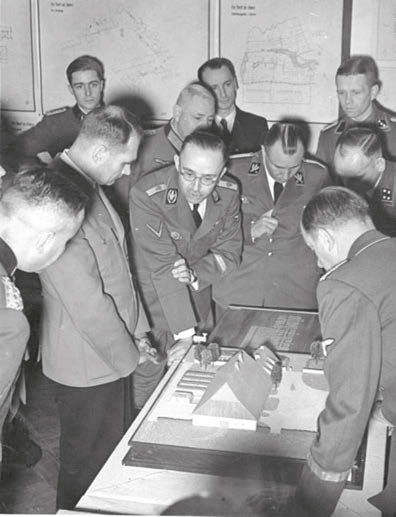
In the General Government from 1939 to 1941, the Nazi authorities treated Ukrainians fairly loyally. They provided access to administrative services, allowed schools to be organized, published and produced newspapers, created economic cooperatives and a network of the so-called “aid committee.” Ukrainians were also granted religious freedom.
But in 1941, the situation changed.
After the German attack on the USSR, Stalin launched his scorched earth tactics on territory relinquished to the Nazis. The destruction of crops in villages and food stocks in the cities began in accordance with Stalin’s order starting from the first days of July 1941. The Soviet authorities abandoned the population to their own fate, without any means of survival.
Before the attack on the USSR, between March and May 1941, the leadership of the Third Reich decided on a number of measures known as the Hunger Plan. These measures included the massive requisitions of products in the occupied territories of the USSR for export to Germany and western Europe, which led to the planned starvation of the occupied cities of Ukraine. The Hunger Plan foresaw the possible death of 20–30 million people, considered to be the “excess population” in the Nazi occupied territories of the USSR.
In other words, Stalin’s orders were superimposed by Hitler’s plans. Between December 1941 and March 1942, these scorched earth tactics led to a mass starvation and the death of millions of civilians and prisoners of war.
In fairness, it must be said that responsibility for this genocide lies at varying degrees with both totalitarian regimes: the Nazis and the Soviets.







