Myth 22 – The Western Lend-Lease Aid Program Was Negligible

Myth
22

The Western Lend-Lease Aid Program Was Negligible

Rostyslav Pyliavets

■ The Essence of the Myth

Aid from America and other Western countries to the Soviet Union as part of the Lend-Lease program during the war was insignificant. It did not affect the economic potential of the country or the results of the military operations of the Red Army at the front. The USSR would have defeated Nazi Germany even without the economic assistance from its allies.

■ Fast Facts

The Lend-Lease assistance program was one of the decisive factors in the victory of the Allies over the Axis powers. The USSR only partially paid the USA for the lend-lease program with gold. Overall, the USSR (and Russia as the successor of the Soviet Union) has still not paid its debt in full.

■ Detailed Facts

The Lend-Lease program – a system which the USA offered mostly free of charge, gave the Allies ammunition, equipment (both military and industrial and agricultural), food and strategic raw materials, including oil. The concept of this program gave the American President the right to decide assistance to any country whose defense was recognized as vital to American interests.

Aid was given to 42 countries. The main clients became the United Kingdom but also the USSR, France, China and other countries that were part of the British Commonwealth. The total volume of the program cost more than $50 billion from 1941 to 1945. The amount of aid to the Soviet Union amounted to $11.3 billion. According to some western experts, general Western support to the USSR reached about $19 billion.

In the USSR, the importance of these supplies was somewhat recognized but also deliberately downplayed. In 1947, the famous economist Nikolai Voznesensky’s report emphasized that the total amount of aid from the Western countries to the Soviet Union under the Lend-Lease program accounted for only about 4% of the Allied assets spent on the war. And that the tanks and aircraft that were supplied were mostly old models.

This myth emphasized the exceptional contribution of the Soviet Union to victory in terms of the opposition of the USSR to the USA within the Warsaw Pact and NATO. Particular attention was focused on the dwindling roles of the Allies. The decreasing importance of the Allied aid in Lend-Lease was one of the main components of this policy.

Historians and economists in North America and Europe, by contrast, claimed that without Lend-Lease the Soviet Union was unlikely to have stopped the German aggression.

The vast majority of researchers recognize that the materialtechnical and humanitarian aid from the USA and other countries given to the USSR during the war as part of the Lend-Lease program and other humanitarian organizations has been, until recently, artificially reduced and downplayed. The deliveries were important for the army as they were given access to new armaments and industrial equipment.
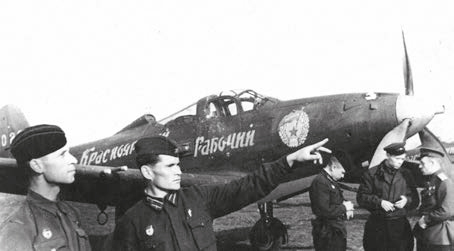
Pilots of the 21st Guardsmen Fighter Aviation Regiment near the American P-39 “Airacobra” plane
(May 1943)

In recent years, against the backdrop of deteriorating relations with the West, this belittling trend in the role of Allied aid during the war has been renewed. This myth has not only been preserved but it has been updated by the Russian Federation, including a book by the current Russian Minister of Russia and the head of the Russian Military- Historical Society, Vladimir Medinsky, entitled Vojna. Mify SSSR. 1939–1945 (War. Myths of the USSR. 1939–1945), which was published in 2011.

The range of supplies for the USSR was determined by the Soviet government and was intended to obscure the deficit in the supply of the Soviet industry and army. This assistance was extremely important and even a saving grace for the USSR.

According to various estimates, the total amount of Western supplies acquired for the army were:

– For armored troops: 12–16 percent,

– For aviation: 10–15 percent,

– For the navy: 32.4 percent

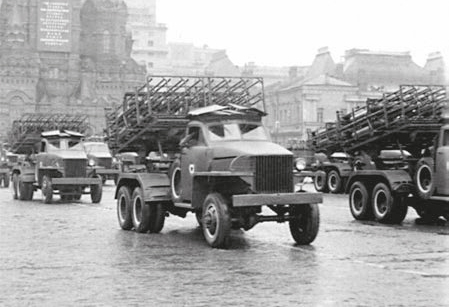
The proportion of transport vehicles from Lend-Lease reached 70 percent, thus the Soviet army traveled mostly in American cars. The basic Katyusha chassis came from the Studebaker. While the United States gave about 20 thousand cars for the Soviet Katyusha, the USSR only produced around 600 trucks.

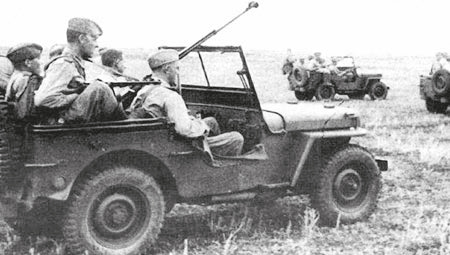
Soviet mechanized units, equipped with American “Willys” Jeeps, Central Front in July 1943

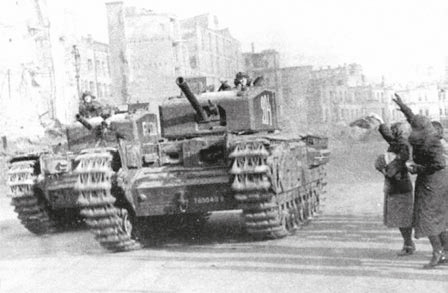
British “Churchill III” tanks for the 48th Heavy Tank Regiment moving along Kyiv streets (November 1943)

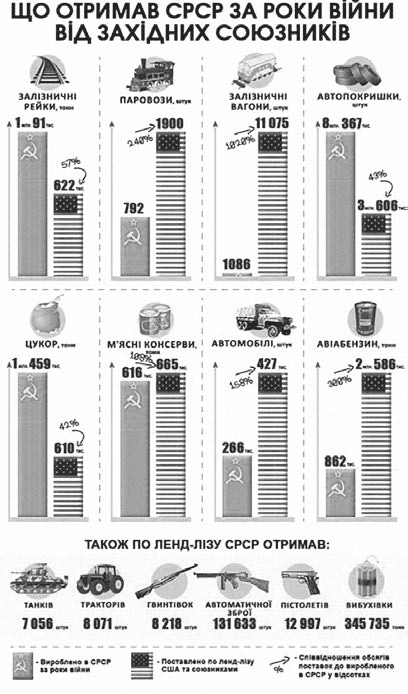
The USSR received from the Lend-Lease:

– 622,100 tons of rails (over 56 percent of domestic production),

– 1,900 locomotives (2.4 times more than the amount produced in the Soviet Union during the war) and 11,075 wagons (10.2 times),

– 3,606,000 tires (43 percent),

– 610 thousand tons of sugar (42 percent), 664,600 tons of canned meat (108 percent)

The USA and the British Empire provided 18 percent of the air fuel used by Soviet aircraft during the war.

The Soviet BM13 “Katyusha” rocket launcher on a chassis of an American “Studebaker” truck (June 1945)

The food supplies that were delivered to the USSR under Lend-Lease were enough to feed an army of 10 million people for 1,688 days – thus the entirety of the war.

And given the calorie content of the food provided by individual companies and humanitarian organizations and the drinking alcohol imported into the USSR, it can be argued that the food which came from the Allies, per calories, was not only enough to fully maintain the Red Army during the war but was also a significant supplement to the diet of the civilian population.

What Did the USSR Receive from their Western Allies during the War?
a. Railway lines
b. Locomotives
c. Train Wagons
d. Tires
e. Sugar
f. Canned Meat
g. Vehicles
h. Aviation Fuel
The USSR also received from the Lend-Lease Program: Tanks, Tractors, Rifles, Automatic Weapons, Pistols, Explosives
*Made in the USSR during the war
*Delivered by the USA and other Allies during Lend-Lease
*Ratio of supply to production in the USSR in percentages
Infographics by Olena Kozin (depo.ua)