
Myth
27
The Ukrainian Nationalists Massacred Jews During the War, Especially in Lviv and Babi Yar
Sergii Riabenko
A.Wojtsekhovskyj, Z. Dygas, G. Tkachenko. Without the Right for Rehabilitation. Collection of Publications and Documents, 2006.
“So with the blessing of the ‘holy’ church, one of the most brutal crimes of the century was carried out – the extermination of the Jews in Ukraine and beyond. Its executioners were not only the SS Einsatzkommando…but also the Ukrainian nationalists, who became famous as hired killers and fascists.”
■ The Essence of the Myth
During the war, the Ukrainian nationalists, as apostates of the Germans, killed the Jews en masse, acting as their main driving force. The majority of cases of mass extermination of Jews at the hands of Ukrainian Nationalists were in Lviv and at Babi Yar in Kyiv.
■ Fast Facts
The massive and systematic extermination of the Jews during the war in Ukraine was carried out by the Nazis. They formed special structures for this – the Einsatzgruppen, Einsatzkommando and Sonderkommando. To strengthen them, the so-called auxiliary police, which were attached to the destructive operations of the Holocaust, was used. It was formed from the local population, Soviet prisoners of war, and former employees of the Soviet police and among them could have been OUN members. They included not only Ukrainians but also Russians and other nationalities. At times, representatives of the local population were also present at the Jewish pogroms, and not only Ukrainians but also representatives of other nationalities. Most of them were not members of the OUN or other Ukrainian nationalist organizations and did not necessarily profess any nationalist views.
■ Detailed Facts
This is another historical myth created by Soviet and later Russian propaganda which tried to justify the struggle of the Soviet secret police against the OUN and UPA. They say that during the war, the “Banderites” not only did everything to exterminate the Jews en masse but also the Poles and anyone speaking Russian. And therefore, the “valiant Chekists” and officials of other “internal organs” “fought” with the “Banderites” until the end of the 1950s because they wanted to prevent the massacre of others.
The Soviet and Russian propaganda included not only OUN members but also members of structures which had no connection to the Organization into the ranks of the “Ukrainian nationalists”.
Often, one can find the assertion of the “mass extermination of Jews by Bandera followers” in Russian media and that “Bandera was responsible for the destruction of Western Ukrainian Jews” to the point that the Nachtigall and Roland battalions are almost made the main initiators of the Holocaust in Ukraine. Thus there is a mixing of concepts in the minds of the viewers and readers trying to artificially create a “logical line”: Ukrainians, who advocated for an independent state, are nationalists and Ukrainian nationalists during the war destroyed the Jews and therefore, anyone who supported the Ukrainian state was explicitly or secretly anti-Semitic and criminals.
The massive and systematic extermination of the Jews during the war years in Ukraine was not conducted by Ukrainian nationalists but rather Nazi military and paramilitary structures. It was mainly through the so-called Einsatzgruppen, Einsatzkommando and Sonderkommando. They consisted of employees from the German security services, SS, police and support staff.
For example, the headquarters of the German Einsatzgruppen arrived in Lviv on 1 July, a day after the German army occupied the city. During this time, a Jewish pogrom took place. A common myth is that the main organizers and executors of the massacre were OUN members and soldiers from the Nachtigall Battalion.
However, the OUN(B) leadership in their resolutions of the Second Great Council in April 1941 indicated that the main purpose of the Organization was the creation of the Ukrainian state and the organization of the Jewish pogroms was an attempt of external forces to divert attention of the “Ukrainian masses” with the goal of using their anti-Jewish sentiments.
Nachtigall as a military unit also did not take part in the organization or the implementation of the pogrom. One of the soldiers of the battalion later recalled that the battalion commander, Roman Shukhevych, ordered soldiers not to participate in massacres of the civilian population. In addition, the post-war hearings at the West German trial of Theodor Oberlander, found no involvement of Nachtigall in the Jewish pogrom. Furthermore, recently declassified KGB documents testify that the allegations against soldiers of this battalion was an elemental part of the special operation of the Soviet secret police in 1959–1960.
Paul Blobel – Commanding Officer of Sonderkommando 4a, which carried out the execution of Jews at Babi Yar
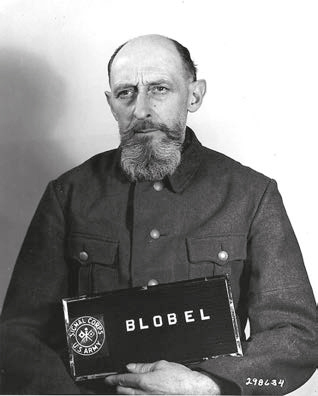
Of course, the fact cannot be refuted that some soldiers of the battalion, as well as other Ukrainian nationalists, had their own motives in participating in the pogrom. However, the main instigators and organizers of the pogrom were representatives of German institutions.
After the withdrawal of the Red Army from Lviv, thousands of corpses of prisoners were found in the city’s prisons – they were shot, without trial by the NKVD before their retreat. This caused the city residents a mass disturbance, who took advantage of German structures to direct their anger and aggression toward the Jews, even though there were representatives of the Jewish community among those who were executed in Lviv prisons.
The main role in the massacre of the Jewish population was played by the local “drudge”: small and very criminal elements of the lower classes of society which included representatives of different nationalities. Of course, no statistics could be found on this. However, at that time, the Ukrainians were a minority in Lviv.
By the end of July 1941, the German Einsatzkommando carried out mass executions of local Jews. In the autumn, the Nazi occupational administration created a ghetto. On the orders of the German authorities, the Jews of Lviv were forcibly deported there. During this operation, about 5,000 of the elderly and infirm were killed.
In the winter of 1941–1942, the Nazis began sending Jews from the Lviv ghetto to concentration camps, primarily to Janowska and Belzec. This was done by units of the SS, German and auxiliary police which consisted of the local population. Only in these two camps, 45,000 Jews from western Ukraine were destroyed there during the war.
The Nazis systematically murdered Jews who could not work. They declared that the only Jews with so-called “worker’s cards” could live in the ghettos and the Germans periodically arranged “cleansings” where they burned houses of hiding Jews. On 1 June 1943, the Lviv ghetto was eliminated on orders of the occupational authorities. SS units and German police were involved in this action. About 3,000 Jews were killed during the liquidation of the ghetto, while 7,000 were taken to the Yaniv concentration camp.
In other regions of Galicia, mass extermination of Jews were held in March-April 1942 by the Sonderkommando, Wehrmacht and Schutzpolizei.
In Kyiv, the mass executions of Jews took place in Babi Yar. After the occupation of the city, on 29–30 September 1941, German troops of the Sonderkommando under the direction of Paul Blobel and German police shot more than 30,000 Jews. The Jews were shot en masse in the first half of October. Soviet and Russian propaganda often stress that a major role in these shootings was played by the “Banderites” in the Bukovyna company and the Kyiv auxiliary police. The appearance and active use of these ideas by the mid-1980s coincided with the beginning of a large-scale propaganda campaign to mark the 40th anniversary of the Nuremberg Trials, which was led by the USSR.
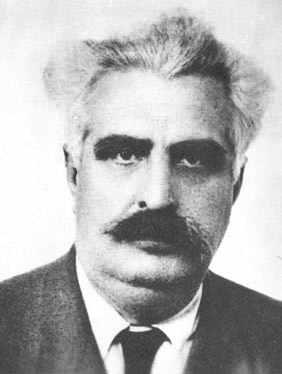
Fedir Vovk – OUN(B) member, Vice- President of the Ukrainian Supreme Liberation Council – Righteous among the Nations for saving Jews during the Holocaust
However, this propaganda used the ignorance of the ordinary citizens about the Ukrainian liberation movement and skillfully blended various structures.
The Bukovyna company had no connection to the OUN(B). It was created by the OUN-M – “Melnykites”. In any case, the soldiers of this company arrived in Kyiv only in the first half of November, more than a month after the Babi Yar crime and therefore could not take part in these executions.
The creation of the Kyiv police began in late September 1941. Some authors mistakenly equate the commander of it with a leading OUN(B) figure, Dmytro Myron (“Orlyk”) and on this basis conclude that this police force was formed by the Banderites and consisted of “Ukrainian nationalists”. But in reality, their commander was Anatoli Konkel, who had a similar nom-de-guerre as Dmytro Myron (who never commanded the Kyiv police force). This same police consisted, mostly, of Soviet prisoners of war. And the “Ukrainian” part was pretty arbitrary and used only on a territorial basis. After all, the majority in its ranks were not Ukrainians but Russians and other nationalities. Finally, during the shootings at Babi Yar, the Kyiv police did take an active part but performed only auxiliary functions – putting up posters, patrolling surrounding areas and collecting things from those who were shot. The German Sonderkommandos and German police shot the Jews. Moreover, neither the population of Kyiv nor OUN structures took part in the shootings at Babi Yar.
Unfortunately, the local population had their own reasons to take part in the pogroms and other anti-Jewish actions in Ukraine. But these included not only Ukrainians but also Russians, Poles and other nationalities. Among them there could have been some members of the Ukrainian nationalist organizations or people who had nationalist views. Even the German documents from the war stated that they did not have broad support among the people for the Jewish pogroms and other anti-Jewish actions.
There is evidence of cases where the OUN(B) in central and eastern Ukraine gave Jews false passports or even sheltered them from the Germans. Among those who rescued the Jews during the war were also OUN members, including the wife of the Supreme Commander of the UPA Roman Shukhevych, Natalia; the priest Father Omelyan Kovch (OUN member since the 1930s); the Vice-President of the Ukrainian Supreme Liberation Council, Fedir Vovk who were later recognized as “Righteous among the Nations”.







