
Myth
28
The Red Partisans – The “People’s Avengers”
Sergii Riabenko, Sergii Butko
Great Soviet Encyclopedia), 3rd Edition, Vol. 19
“The partisans were called the ‘People’s Avengers’. They took revenge against the fascist invaders for their treacherous attack on our country, for the terror, looting and violence they committed in the occupied territories. The partisan movement… was the struggle of the Soviet people against the fascist invaders in the temporarily occupied territories of the USSR, the main form of which were armed partisan and underground fighters… It unfolded throughout the occupied territories and had an unprecedented performance in history and scope.”
■ The Essence of the Myth
After the German attack on the Soviet Union, the local population en masse and immediately joined the Soviet partisans. Their orders, from the early days of the war, were for an active resistance to the invaders and causing heavy losses. They also took revenge for the suffering of civilians.
■ Fast Facts
The Soviet partisans were formed mainly in a central and planned manner by the Soviet authorities. The core leaders were from the Soviet party branches and members of the NKVD. By 1943, their activity was limited to areas where there were no large occupational forces. The Soviet partisans repeatedly abused the local residents, requisitioned food and property and sometimes killed civilians.
■ Detailed Facts
Unlike the resistance movements of Western Europe, which were a result of the self-organization of the civilian population, the Soviet partisan movement was created and controlled by the Communist Party and the NKVD who provided them with Red Army support, communication and weapons.
In the commands of the Central (CHPM) and Ukrainian (UHPM) Headquarters of the Soviet Partisan Movement, there were no requirements to protect people from terror or repression from the enemy.
Partisans fought in battles and carried out diversionary work, despite the interests and security of the civilian population. Their activities were not only the cause of violent repressions upon the masses by the occupiers but the partisans often did not try to protect the civilians from any punitive actions. A typical example of this was the Koriukivka massacre in March 1943.
The USSR government tightly controlled the Red partisan movement. There was a commissar, along with a political and NKVD officer in each squad. The Chief of the UHPM became the experienced NKVD officer, Tymofei Strokach.
An important task of the Soviet partisans was controlling the political loyalty of the local population. Any unauthorized initiative by the partisans “on the ground” was to be placed under complete central control. The “People’s Avengers”, who were not used to communist activities or who attempted to act independently from the guidance of the center, were carefully checked.
Some were immediately accused of disloyalty and subject to reprisals after the war. For example, the leader of the Soviet underground in the Uman province, Kuzma Hryb, was sentenced to 15 years in prison for confiscating property and the Rzhyshchiv underground regional committee head of the Ukrainian Communist Party was generally called a “nationalist.”
In early 1942, the Red partisan movement virtually ceased to exist. This was a consequence of the collapse of its governing bodies on the ground, betrayal and loss of its material base along with active operations of the occupiers.
According to the Ukrainian SSR NKVD, 1,874 units numbering about 30,000 soldiers were formed during the entire period from the beginning of Nazi aggression until 1 March 1942. However, on 1 May 1942, in NKVD communications to their units, only 37 partisan groups were incomplete with two thousand participants. The loss of Soviet partisans in the first year approached nearly 100 percent of the movement.
According to historians, between 115,000 and 180,000 soldiers went through the ranks of the Soviet partisan movement in Ukraine in 1941–1944. The majority “went over to the partisans” only after an Allied victory of the war in 1943–1944 was determined and after the massive Soviet offensive in the west.
From the very beginning of the German-Soviet war, the core of the partisan units and detachments were the communist nomenclature, NKVD employees and Red Army military personnel. Much of the then partisan activists who became the leadership of the Soviet partisans, were in 1920–1930 involved with the organization of forced collectivization, the Holodomor and Soviet repression.
Gregory Balytskij – commander of the “Stalin” Chernihiv- Volhynia partisan unit
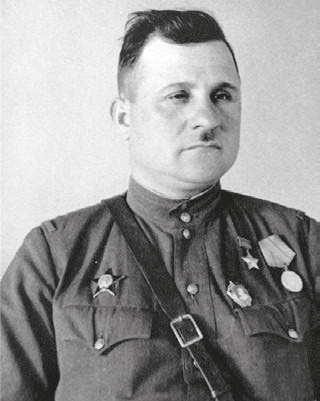
The partisan leader of the Chernihiv province was the pre-war First Secretary of the Regional Ukrainian Communist Party Committee, Oleksiy Fedorov, and later a Major-General of the NKVD. His first deputy was Mykola Popudrenko, who before the war was the Third Secretary of the same committee. In one of his orders from October 1941, Fedorov ordered the “destruction of all the kulaks, who re-occupied their former houses.”
Archived documents are filled with the testimonies of the brutality of the Soviet partisan food requisitions. These events were hidden in the documents of the top leadership of the USSR with the euphemisms such as “self-provisions” and the “partisans exist at the expense of local resources.”
As retribution for the actions of the Soviet partisans, the Nazi occupational regime destroyed more than 670 residential settlements and at least 50,828 civilians on the territory of modern Ukraine.
Between 1 and 2 March 1943, Nazi punitive squads completely burned down the town of Koriukivka in the Chernihiv region, along with its inhabitants. About 7,000 people killed and 1,290 homes burned. Only around 10 houses survived in the town.
Chernihiv- Volhynia partisan unit Command
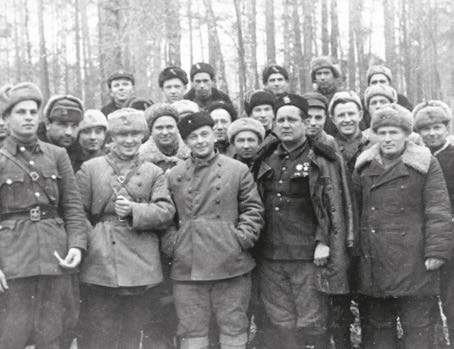
The Koriukivka massacre was the greatest crime against a civilian population of its kind during the Second World War in Europe. However, unlike Khatyn, the Koriukivka massacre did not become a symbol of mourning for the Union and its history was silenced by the USSR.
The reason for this silence is quite simple: the Koriukivka massacre was useless for Soviet propaganda, because it was provoked by a partisan attack on the local occupational authorities. In addition, when a later detachment numbering about 300–500 people launched a punitive destruction of the town, the partisans did nothing to protect it. Although a Fedorov partisan unit was standing within 15 kilometers of the town and numbered 3–5,000 soldiers and therefore, had a tenfold advantage in terms of numbers over the enemy. There were also advanced partisan patrols located three kilometers from Koriukivka who idly watched the glow of the burning town. And after a few weeks – on 18 March – in the Bolshevik newspaper, the Red partisans denounced the bloody disgrace of the massacre of Koriukivka residents on the occupiers and remained silent about their own inactions.
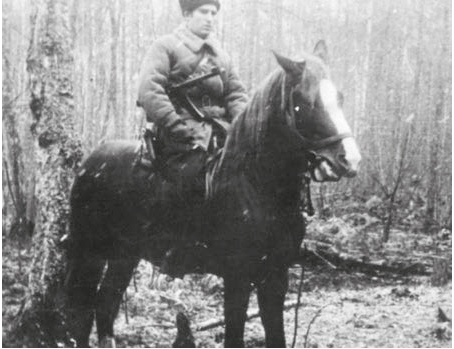
Anton Brynskij –
commander of a
partisan brigade
in Polissia.
Killing
his own partisans
and civilians in
his brigade for
looting was a
norm for him
Soviet historiography and propaganda also avoided descriptions of unworthy acts and crimes of the Soviet partisans, and the documents of the partisans were classified in Soviet archives.
The orders mention cases when the commanders of the partisan groups sent soldiers “on the path of robbery whose objective was delivering pigs or sheep to the farmers”, or that a group of soldiers “took by force, one pig, a board of meat, a pound of flour and salt” from the locals.
In the documents, one can also read how a partisan commander “once again proved to be looting, that is took cloth from a farmer and exchanged it for vodka.” Or when a sergeant of the Propaganda Department stole a horse from a local resident and demanded in return two liters of moonshine. Or when the deputy commander of a partisan unit “repeatedly drank and drunkenly threatened the population with weapons.”
The behavior of the Soviet partisans was not a surprise to the Soviet leadership. For example, in one of its dispatches, the head of the UHPM, Timofei Strokach, wrote about the commander of the Lenin unit in Volhynia: “Your reconnaissance unit of 50 people [in] the beginning of December along the Horyn River, killed 48 civilians because there was one shot made at you. Your reconnaissance of 26 November, took 150 heads of cattle from the civilians in the village of Rokytne. People in the detachments began to deteriorate and engaged in looting.”
The Soviet myth about the red partisans as the “People’s Avengers” was conceived as a “smokescreen” from the beginning. Under the veil of the fictional magnitude of communist resistance to the occupiers, these uncomfortable pages had hide from history.







