Myth
38
The Liberation of Ukraine
Serhii Horobets
Ukrainian Presidential Decree from 20.10.2009 No. 536/2009
“In order to nationally celebrate the liberation of Ukraine from fascist invaders…the Day of Ukraine’s Liberation from Fascist Invaders is established, which will be celebrated every year on 28 October.”
■ The Essence of the Myth
Soviet troops liberated Ukraine from the fascist invaders on 28 October 1944.
■ Fast Facts
With the expulsion of the Nazi occupiers in 1944, Ukraine did not receive freedom rather it was only occupied by another totalitarian regime. The result of which was mass repressions and deportations including hundreds of thousands of Ukrainians, Poles and the entire Crimean Tatar people and the mass starvation of hundreds of thousands of residents in Ukraine between 1946–1947.
■ Detailed Facts
There are three errors in the phrase “Soviet troops liberated Ukraine from the fascist occupiers on 28 October 1944.”
Firstly, Soviet troops did not liberate but rather expelled the occupiers. The expulsion of the invaders did not bring about a free Ukraine just another totalitarian regime.
Secondly, the last battle with the occupiers on modern Ukrainian territory took place almost a month later.
Thirdly, it is improper to use the term “fascist” to describe the Nazis (more on this in Myth 16).
Between December 1941 and January 1942, Soviet forces organized the first major offensive on Ukrainian territory.
The Red Army managed to recapture only minor areas like the whole territory of Crimea and Barvinkove.
Their next attempt at developing preliminary success resulted in two catastrophic defeats of Soviet forces in the spring of 1942 in Crimea and near Kharkiv and their retreat back to the Volga. The entire Ukrainian territory was then occupied by German troops.
In February 1943, after the developing offensive operations after the victory at Stalingrad, Soviet troops occupied Kharkiv and some other Ukrainian cities but in March 1943, they had to withdraw from them because of a German counterattack.
Only in the autumn of 1943, did the final expulsion of the Nazi occupiers from Ukraine begin.
A tradition to celebrate the liberation of Ukraine on 28 October began in the USSR since on that day in 1944, Soviet troops drove the Germans from the territories of Soviet Ukraine along its then border.
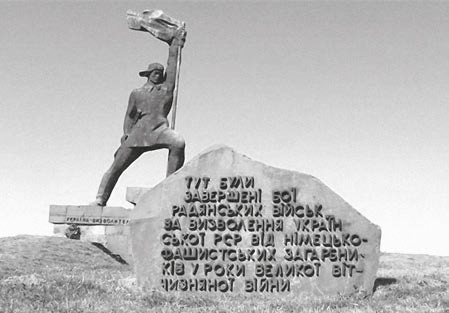
In the summer of 1945, in accordance with international agreements, Czechoslovakia gave the Soviet Union Transcarpathia, which became part of the USSR. Therefore, they subsequently decided to transfer the day of commemorating this celebration to the day when German troops left the last settlements of the modern Zakarpattia province.
Soviet poster from 1944, which spoke of “liberating” Ukraine
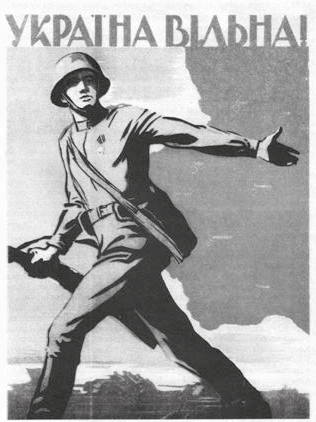
But on 28 October 1944, Soviet troops only began fighting for the city of Chop. The fight for this area lasted until 25–26 November – only then were the Nazi occupiers fully expelled from Ukraine.
All of Ukraine was involved in expelling the occupiers: regular Soviet troops and Red partisans (with more than 3 million Ukrainian soldiers), the national underground headed by the Ukrainian Insurgent Army and Ukrainian soldiers along all the other fronts in the world which brought together the victory over Hitler.
The expulsion of the Nazi occupiers was accompanied by mass crimes, organized by the Stalinist regime and the Soviet troops under his command:
– the “black infantry” was used – hastily mobilized Soviet locals commanded (in the military field) and thrown into battle unprepared, without uniforms and sometimes unarmed which can be seen as a deliberate attempt to destroy the Ukrainian population;
– The Ukrainian soldiers in the Soviet Army were used in battles against the nationalist underground between 1943– 1944. This meant a fratricidal war between the Ukrainians who served in the Red Army and the UPA (for more details see Myth 39);
– In 1944, when Crimea was purified of the Germans, the Soviets launched a series of deportations. The entire Crimean Tatar population was deported to Central Asia (180,000) and the local Greeks, Bulgarians and Armenians were also deported;
– People who were in occupied territory including the Ostarbeiter and Red Army prisoners of war faced various legal restrictions and harassment;
– Ukrainians continued to suffer losses even after the war since mass repression of Ukrainian Nationalists lasted until Stalin’s death. According to various estimates, during the suppression of the nationalist movement in western Ukraine, about 150,000 people were killed, 130 thousand were arrested and more than 200 thousand were deported;
– As a result of the organized mass starvation in 1946–1947 in Ukraine, almost 1 million people were killed and about another million political prisoners suffered in GULAGs. The last political prisoner of the communist regime was Bohdan Klymchak who returned from the camps on 11 November 1990.
The expulsion of the Nazi occupiers from Ukraine did not bring about peace and freedom but rather the return of the communist terror, mass deportations and the persecution of dissidents.
The Ukrainian liberation movement, not believing that the German expulsion was a liberation, continued to fight for the independence of Ukraine for another decade. The harassment of dissidents did not stop until the collapse of the USSR.
True freedom and sovereignty for the Ukrainian people only came on 24 August 1991, with its acquisition of independence.
In 1970 in the northern outskirts of Uzhhorod, a monument entitled “Ukraine – Liberators” was unveiled