Myth 32 – Bandera Personally Led the UPA

Myth
32

Bandera Personally Led the UPA

Igor Bigun

The Great Patriotic War: 1941–1945: Encyclopedia for Students

“Almost 1 million former Soviet citizens (ROA, Muslim Battalions, Cossack formations, police and so on) served in the ranks of the Wehrmacht during the war. The 180,000 in the Ukrainian Insurgent Army of S. Bandera (UPA) stood apart as those who fought not only the Soviet but the Polish partisans but often the Nazis. For Bandera, the war for ‘independent Ukraine’ continued until 1945.”

■ The Essence of the Myth

Stepan Bandera directly supervised all the structures of the liberation movement, including the UPA, during and after the war.

■ Fast Facts

Stepan Bandera was the founder and leader of the OUNRevolutionary branch from 1940–1941 and then the leader of the OUN Émigré from 1946–1959. Bandera could not personally command the Ukrainian Insurgent Army, since he was a Nazi prisoner from July 1941. The UPA began to be formed only in 1942. From the moment of his arrest, on 5 July 1941, Bandera physically could not control any political or military nationalist formations.

■ Detailed Facts

On 10 February 1940, at a meeting of the nationalist leaders in the Polish city of Krakow, Bandera created and headed the Revolutionary Leadership of the OUN. He rallied around a new generation of OUN members, who had different visions for the strategy of liberation than the other OUN leaders.

During the Second Great Council of the OUN in April 1941, Bandera’s organization finally took shape and called themselves the OUN-Revolutionary. But in publications, it was referred to as the OUN(B) for Bandera, in order to differentiate it from the OUN-M, under Andriy Melnyk.

Bandera led the Revolutionary OUN until 5 July 1941, when he was arrested for refusing to renounce the Declaration of Ukrainian State Act which was proclaimed on 30 June 1941 in Lviv.

He was taken to a prison in Berlin and from that point he was not able to come back to Ukraine. Mykola Lebed temporarily replaced Bandera.

In the end of 1942, the Volhynia regional OUN(B) leadership initiated the creation of the Ukrainian Insurgent Army.

Vasyl Ivakhiv, otherwise known as “Som” or “Sonar,” – the military referent of the same regional leadership, became the first commander.
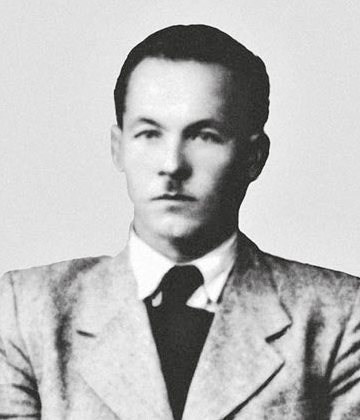
Vasyl Ivakhiv – founder and first commander of the UPA

After his death in battle with German troops on 13 May 1943, the position of Supreme Commander of the UPA was taken over by Dmytro Kliachkivskyi (“Klym Savur”), the regional OUN leader in Volhynia.

From December 1943, the UPA was led by Roman Shukhevych (“Taras Chuprynka”) until his death on 5 March 1950. Shukhevych was elected as head of the OUN Leadership Bureau instead of Lebed on 13 May 1943. So in December 1943, the OUN and UPA leadership was placed in the hands of one person.

The last leader of the Ukrainian liberation movement was Vasyl Kuk (“Lemish” or “Vasyl Koval”) until he was arrested by Soviet security officers on 23 May 1954.

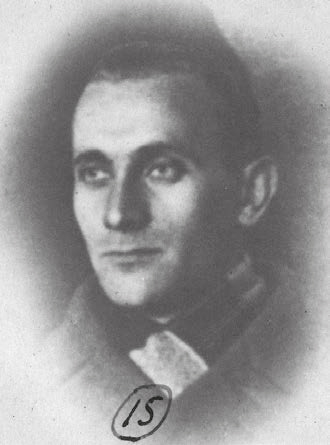
Ivakhiv’s case as the Supreme Commander was developed by Dmytro Klyachkivsky

The OUN(B) and the UPA appealed to the population using the personality of Stepan Bandera. They considered him as their leader, even though he was behind bars. Due to this the OUN members and UPA soldiers were popularly called “Banderites.”

Bandera himself was released from Sachsenhausen Nazi concentration camp on 27 September 1944, and then spent time under the supervision of the Germans.

In February 1945, he was elected as a member of the OUN Leadership Bureau. When in February 1946 he became a member of the Émigré OUN, he was elected the head of its leadership. He remained in this position until he was killed by a Soviet agent on 15 October 1959.

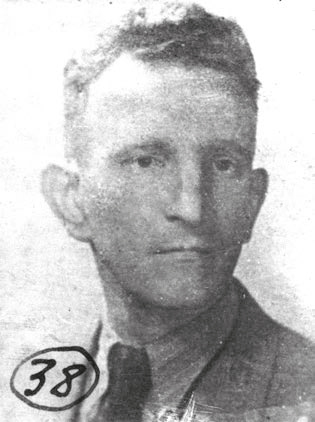
Roman Shukhevych – longest servicing UPA Supreme Commander

Stepan Bandera was never the commander of the UPA. He headed the Organization of Ukrainian Nationalists (Revolutionary) and the Émigré OUN members. The Ukrainian Insurgent Army was commanded by Vasyl Ivakhiv, Dmytro Kliachkivskyj, Roman Shukhevych and Vasyl Kuk. Although they were all associated with Bandera and recognized his authority, Bandera himself remained a symbol of the Ukrainian liberation movement even if he could not exercise any operational management over the OUN or UPA from his cell in the Nazi prison and camp.

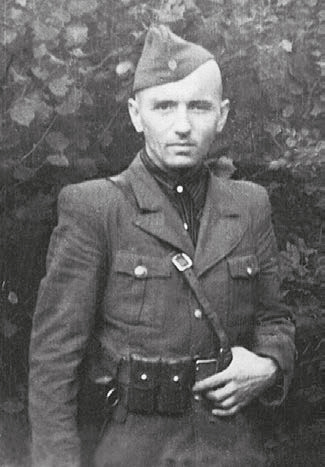
Last of the Mohicans. Vasyl Kuk – Supreme Commander of the UPA from 1950–1954